
The era of the “standard” investment portfolio is officially over as Tier-1 global banks deploy generative AI to offer bespoke wealth management at scale. This technological shift is transforming the role of the junior analyst from a data-gathering “grunt” into a high-leverage strategic navigator of AI-driven insights.
For decades, the luxury of a personalized investment strategy was reserved for the Ultra-High-Net-Worth (UHNW) individual—those with $25 million or more in investable assets. The reason was simple: the human cost of tailoring a portfolio to a client’s specific tax situation, ethical preferences, and risk tolerance was too high for anyone else. Today, we are witnessing a fundamental shift. Global Systemically Important Banks (G-SIBs) like JPMorgan Chase and HSBC are aggressively rolling out AI tools that provide this same level of customization to the “mass affluent” segment, using algorithms that can process millions of data points in milliseconds.
The Shift from Static Models to Predictive Personas
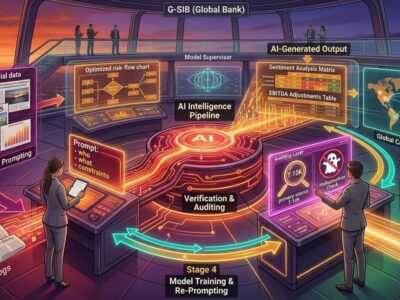
In our observation, the most significant change isn’t just the speed of calculation; it is the shift from reactive to predictive wealth management. Traditionally, a junior analyst would spend hours pulling historical performance data into a spreadsheet to justify a rebalancing decision. Now, AI-driven engines are performing “lifestyle-aware” analytics. These systems don’t just look at market volatility; they analyze a client’s spending patterns, career trajectory, and even sentiment analysis from their interactions with the bank’s mobile app.
The real-world impact is visible in how institutions are structuring their wealth divisions. By using Large Language Models (LLMs) to scan thousands of earnings calls and research reports, banks can now offer “thematic” portfolios that update in real-time. If a client expresses interest in green energy, the AI doesn’t just buy an ESG fund; it builds a custom basket of equities based on the very latest regulatory filings and sentiment shifts, a task that previously would have required a dedicated team of researchers.
JPMorgan and the Rise of IndexGPT
JPMorgan Chase has been a frontrunner in this space, recently filing trademark applications for “IndexGPT.” This isn’t just a chatbot; it is a signal that the bank intends to use generative AI to select and optimize securities for its clients. For an Associate-level banker, this means the technical barrier to creating complex, custom indices has vanished. The value-add now lies in “Prompt Engineering for Finance”—knowing how to ask the model to stress-test a portfolio against specific geopolitical risks or liquidity crunches.
HSBC: Navigating Multi-Currency Complexity
On the global stage, HSBC is utilizing AI to manage the friction inherent in cross-border wealth management. For clients with assets across different jurisdictions, AI tools are now used to optimize for tax efficiency and currency fluctuations across multiple borders simultaneously. This level of “interoperability” was once a manual nightmare for junior analysts. Now, automated systems flag when a client’s exposure in a specific region exceeds their risk profile due to a sudden currency devaluation, allowing for near-instant hedging strategies.
Efficiency Analysis: Traditional vs. AI-Augmented Wealth Management
To understand the scale of this transformation, we must look at the operational metrics. The following table illustrates the performance leap when AI is integrated into the wealth management workflow.
| Factor | Traditional Process | AI-Augmented Process |
|---|---|---|
| Process Speed | 3-5 days for custom portfolio review | Near Real-Time (Seconds) |
| Risk/Error Rate | High (Manual data entry & human bias) | Low (Algorithmic consistency) |
| Operational Cost | High (Requires multiple junior/senior FTEs) | Scalable (Low marginal cost per client) |
| Client Personalization | Generic Risk-Aversion Buckets | Hyper-Personalized Sentiment-Based Portfolios |
How Junior Professionals Can Capture This Edge
If you are an analyst or associate in today’s market, your “moat” is no longer your ability to build a DCF model from scratch. The AI can do that faster and more accurately. Your edge is your ability to interpret the “hallucinations” and “blind spots” of these AI models. You need to become the bridge between the high-level output of the machine and the nuanced needs of the client.
- Master Querying, Not Just Calculating: Learn how to use Python-based AI libraries to query internal bank databases. The future of banking is “Natural Language to SQL.”
- Focus on Behavioral Finance: AI is great at numbers but lacks empathy. Use AI to handle the data, and use your time to understand the psychological motivations behind client decisions.
- Stay Ahead of the “Black Box”: Regulators like the SEC and FCA are increasingly focused on “AI Explainability.” If you can explain exactly *why* an AI recommended a specific trade, you become indispensable to the compliance department.
The Algoy Perspective
The real winner in this race will not be the bank with the “best” AI, but the bank with the cleanest data. The biggest mistake firms are making today is throwing advanced generative models at legacy data silos. Most banks still struggle with fragmented systems where a client’s mortgage data doesn’t “talk” to their brokerage account. This creates a massive opportunity for the savvy junior professional: those who take the initiative to lead data-cleaning and integration projects will find themselves on the fast track to VP roles.
The reality check is simple: While AI is incredibly powerful, it is currently a “idiot savant.” It can calculate the optimal Sharpe ratio across 10,000 stocks in a heartbeat, but it doesn’t know that a geopolitical conflict is brewing until it hits the news wires. The future of wealth management is a “Cyborg” model—human intuition combined with algorithmic scale. The banks that try to replace humans entirely will fail due to regulatory blowback and client distrust. The banks that empower their junior staff with AI, however, will capture the multi-trillion dollar wealth transfer currently underway.
Sources and Further Reading
- JPMorgan Chase Newsroom: https://www.jpmorganchase.com/newsroom
- Goldman Sachs Intelligence: https://www.goldmansachs.com/intelligence/
- HSBC News and Media: https://www.hsbc.com/news-and-media