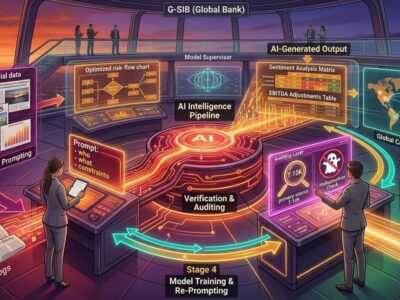

Global transaction banks are rapidly shifting from reactive liquidity management to AI-driven predictive modeling to eliminate the high costs of idle capital. This transition allows associate-level bankers to move away from manual spreadsheet reconciliation and toward high-value strategic forecasting across complex, multi-currency payment corridors.
In the world of global transaction banking (GTB), liquidity is the lifeblood of the system. For years, the industry operated on a “just-in-case” model, where banks held massive intraday buffers to ensure they could meet payment obligations across different time zones and settlement systems. However, the rise of real-time payment rails and the increasing cost of capital have made this approach obsolete. Today, Tier-1 institutions like JPMorgan and HSBC are leveraging artificial intelligence to transform liquidity from a stagnant requirement into a dynamic asset.
The Death of Reactive Liquidity Management
Traditional liquidity management has always been hampered by fragmentation. When you are managing cash across dozens of jurisdictions, each with its own regulatory requirements and settlement cycles (like Fedwire, CHIPS, or TARGET2), visibility is often delayed. Junior analysts have historically spent hours pulling reports from disparate legacy systems just to understand the bank’s “noon position.”
The real-world impact of this lag is expensive. If a bank underestimates its liquidity needs, it must borrow at a premium in the overnight market. If it overestimates, it leaves millions—sometimes billions—of dollars sitting idle in non-interest-bearing accounts. AI is changing this by providing “predictive visibility,” allowing banks to anticipate payment peaks before they happen.
The Role of Machine Learning in Cash Forecasting
Machine learning models are now being trained on years of historical payment data to identify patterns that a human analyst would never see. These models account for seasonal trends, month-end volatility, and even the specific behavior of corporate clients. For example, if a major multinational client typically initiates its payroll transfers on the third Tuesday of the month, the AI factors this into the intraday liquidity forecast automatically.
This allows for “Just-in-Time” liquidity. Instead of keeping a flat buffer all day, the bank can dynamically sweep funds across regions, ensuring that the right amount of currency is in the right place at the right time. This reduces the reliance on costly central bank credit lines and optimizes the bank’s overall balance sheet.
Efficiency Analysis: Traditional vs. AI-Augmented
To understand the magnitude of this shift, we must look at the operational metrics that define success in transaction banking. The following table illustrates the performance gap between legacy manual processes and modern AI-augmented systems.
| Factor | Traditional Static Thresholds | AI-Augmented Predictive Sweeping |
|---|---|---|
| Process Speed | Batch-processed (End-of-day or T+1) | Real-time / Intraday streaming |
| Forecasting Accuracy | 65-75% based on historical averages | 92-98% using deep learning models |
| Risk/Error Rate | High (Manual entry and late-day spikes) | Low (Automated anomaly detection) |
| Operational Cost | High (Requires large reconciliation teams) | Low (Automated sweeping and reporting) |
Overcoming the “Idle Cash” Trap
For a junior analyst, the “idle cash” trap is a common frustration. You see liquidity sitting in a EUR account while the bank is paying interest to borrow USD to cover a settlement. AI-driven “Smart Sweeping” solves this by using algorithmic foreign exchange (FX) execution combined with liquidity forecasting. The system can automatically execute a swap to cover a projected deficit three hours before it occurs, often securing a better rate than a desperate last-minute market order.
Major global systemic banks (G-SIBs) are now integrating these AI layers directly into their core banking platforms. This isn’t just about saving money on interest; it is about capital efficiency. By reducing the “liquidity buffer” required by regulators (such as the Liquidity Coverage Ratio or LCR), banks can reallocate that capital to higher-yielding investment activities or lending.
The Professional Pivot: How Analysts Stay Relevant
If the AI is doing the forecasting, what happens to the Associate or the Junior Analyst? The role is shifting from “data gatherer” to “model supervisor.” In our observation, the most successful young professionals in banking today are those who understand the “plumbing” of the AI models. You don’t need to be a data scientist, but you must be able to interpret the output and identify when a model is hallucinating or failing to account for a “black swan” geopolitical event.
- Master the Logic: Understand how variables like interest rate hikes or regional holidays affect the training data of the bank’s liquidity models.
- Interoperability Focus: Learn how different payment systems (like ISO 20022) feed data into the AI. This is where most technical friction occurs.
- Strategic Advisory: Use the time saved from manual reporting to advise corporate clients on how they can optimize their own treasury operations using the bank’s AI tools.
The Algoy Perspective
The real winner in the race for liquidity dominance won’t be the bank with the biggest balance sheet, but the one with the cleanest data. The biggest mistake firms are making right now is trying to layer sophisticated AI over “garbage” legacy data silos. While AI is powerful, most banks still struggle with fragmented core systems that don’t talk to each other in real-time. This creates a “hallucination risk” where the AI makes predictions based on incomplete information.
The future of this space is the “Autonomous Treasury.” We are moving toward a world where the majority of intraday liquidity movements are handled without human intervention, governed by pre-set risk parameters. For junior professionals, the message is clear: stop learning how to build better spreadsheets and start learning how to audit and manage autonomous financial systems. The friction of global payments is being engineered away, and those who can navigate the interface between code and capital will be the ones who lead the next generation of global banking.
Sources and Further Reading
To stay updated on how the world’s largest institutions are rolling out these technologies, refer to the official newsrooms of the leaders in this space:
- JPMorgan Newsroom: https://www.jpmorganchase.com/newsroom
- HSBC News and Media: https://www.hsbc.com/news-and-media