
Artificial intelligence has shifted from a back-office efficiency tool to a front-line revenue generator for the world’s most elite wealth management institutions. For junior analysts and associates, the ability to leverage these AI-orchestrated insights is quickly becoming the primary benchmark for career advancement in private banking and asset management.
The New Era of “Cognitive” Wealth Management
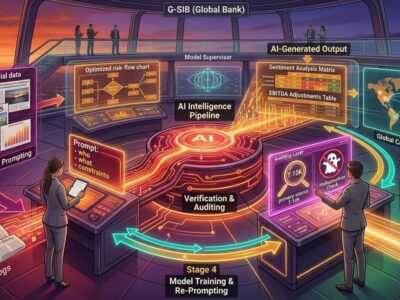
In our observation, the traditional model of wealth management—where an advisor spends years building a relationship based on manual portfolio reviews—is being completely overhauled. Large global banks, often referred to as Global Systemically Important Banks (G-SIBs), are now deploying “Cognitive Wealth” platforms. These systems do not just analyze numbers; they analyze sentiment, life events, and behavioral patterns to help advisors act before a client even realizes they have a need.
The real-world impact is a move away from “product pushing” toward “hyper-personalized advisory.” Instead of sending a generic market update to a thousand clients, an AI-enabled associate can now identify the specific twenty clients whose portfolios are most sensitive to a sudden shift in Japanese interest rates or a new ESG regulation in the EU. This allows for a level of precision that was physically impossible just five years ago.
How the Giants are Leading the Charge
Major institutions like JPMorgan Chase and HSBC are not just experimenting with AI; they are embedding it into the core of their advisor desktops. The goal is to reduce the “administrative drag” that consumes up to 60% of a junior analyst’s day.
- JPMorgan Chase: The bank has been vocal about its “IndexGPT” initiative and other AI tools designed to help advisors parse through thousands of analyst reports. In our observation, the true value lies in the “Next Best Action” engines that prompt advisors with specific talking points based on a client’s unique tax situation and risk appetite.
- HSBC: Within its Global Wealth and Personal Banking division, HSBC is utilizing AI to scale its “Prism” advisory platform. This system uses algorithmic modeling to ensure that even mid-tier affluent clients receive the same level of institutional-grade portfolio optimization that was previously reserved for Ultra-High-Net-Worth (UHNW) individuals.
- Goldman Sachs: By leveraging large language models (LLMs) to summarize complex regulatory changes and market shifts, Goldman is enabling its junior cohorts to focus on high-level strategy rather than the manual collation of data.
The Shift in the Associate’s Daily Workflow
For a junior professional, this means your value-add is changing. You are no longer the “data fetcher.” The AI is the data fetcher. Your role is now to be the “context provider.” You must interpret the AI’s output and wrap it in a narrative that aligns with the client’s long-term legacy goals. The professionals who thrive will be those who can “prompt” the bank’s internal models to find alpha that others miss.
Efficiency Analysis: Traditional vs. AI-Augmented Wealth Advisory
To understand the scale of this transformation, we must look at the operational metrics. The following table illustrates the shift in performance indicators for an average wealth management pod.
| Factor | Traditional Advisory (Manual) | AI-Augmented Advisory |
|---|---|---|
| Process Speed (Portfolio Rebalancing) | 2-3 Days per Client Base | Near Real-Time (Minutes) |
| Risk/Error Rate | Moderate (Human oversight gaps) | Low (Automated compliance checks) |
| Operational Cost (per Client) | High (Labor intensive) | Scalable (Low marginal cost) |
| Personalization Depth | Surface-level (Standard buckets) | Hyper-personalized (N=1) |
Bridging the Gap: Practical AI Workflows for Analysts
If you are an associate at a global bank today, you should be looking for ways to integrate these tools into your workflow immediately. The real-world application often starts with “document intelligence.” Instead of reading a 200-page prospectus, use your firm’s internal AI tools to extract key covenants, risk factors, and liquidity terms.
Another critical workflow is “Sentiment Arbitrage.” By using AI to monitor news feeds and social sentiment regarding specific holdings in a client’s portfolio, you can provide proactive briefings. If a regulatory shift is brewing in the SEC regarding a client’s major tech holding, an AI-augmented analyst will have a briefing note ready for the senior partner before the market opens. This proactive stance is what gets associates noticed by senior leadership.
The Role of Compliance and ESG
We are also seeing a massive surge in AI’s role within ESG (Environmental, Social, and Governance) reporting. Clients now demand to see the “carbon footprint” of their portfolios. Manually calculating this across various asset classes is a nightmare. AI-driven ESG engines now pull data from non-traditional sources—satellite imagery, news reports, and shipping manifests—to give a more accurate picture of a company’s true ESG standing. For the junior banker, mastering these tools is essential for staying relevant in an increasingly “green” financial landscape.
The Algoy Perspective
The biggest mistake firms—and individual professionals—are making is viewing AI as a “productivity tool” rather than a “strategic pivot.” The real winner here will not be the bank with the fastest algorithm, but the one that successfully blends high-tech precision with “high-touch” human empathy.
While AI is incredibly powerful at identifying patterns, it remains remarkably poor at understanding the emotional nuances of a client’s family office dynamics or their philanthropic legacy. The real-world impact of AI in wealth management is that it raises the bar for what “human value” actually looks like. If your job can be summarized in a spreadsheet, you are at risk. If your job involves navigating the complex emotional and strategic landscape of a client’s wealth using AI-generated insights, your career is future-proof.
A reality check is necessary: Most global banks are still struggling with “data debt.” Legacy systems often store client information in disconnected silos, making it difficult for even the most advanced AI to get a holistic view. The associates who can navigate these internal data hurdles and help “clean” the input for the AI models will be the unsung heroes of the next decade. Do not wait for the perfect system; learn to work with the imperfect one you have.
Sources and Further Reading
For those looking to dive deeper into the specific AI implementations at the world’s leading banks, we recommend following the official updates from these institutions: