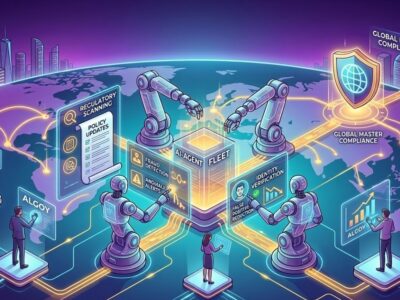

The archaic world of trade finance is finally shedding its paper-based skin as global systemic banks integrate Large Language Models to automate complex document verification. For junior analysts, this shift represents a move away from manual data entry toward high-level risk orchestration and strategic liquidity management.
Trade finance has long been the “clunky” sibling of the banking world. While high-frequency trading operates in microseconds, a typical letter of credit can still take days to process, moving through a physical chain of stamps, signatures, and courier pouches. The sheer volume of paper—bills of lading, commercial invoices, and certificates of origin—creates a massive bottleneck in global commerce. However, we are now seeing a fundamental shift as major institutions like HSBC and JPMorgan deploy AI to transform these physical assets into digital intelligence.
The Trillion-Dollar Friction Problem
In our observation, the primary hurdle in trade finance isn’t a lack of capital; it’s a lack of speed. Every year, trillions of dollars in trade are delayed because of “discrepancies” in paperwork. A single typo on a Bill of Lading can freeze a multi-million dollar shipment at a port for weeks. Traditionally, junior analysts at major trade banks spent 70% of their time manually “eye-balling” documents to ensure they complied with international standards like UCP 600.
The real-world impact of AI here is the elimination of the “human-in-the-loop” requirement for basic verification. By using specialized OCR (Optical Character Recognition) combined with NLP (Natural Language Processing), banks are now able to extract data from unstructured, handwritten, or poorly scanned documents with over 95% accuracy. This isn’t just about reading text; it’s about understanding the context of the trade.
From OCR to Cognitive Reasoning
Earlier iterations of technology could only “scrape” data. Modern AI systems used by G-SIBs go further—they reason. If a commercial invoice lists a price for “Grade A Crude” that deviates significantly from the current market spot price, the AI flags it for potential fraud or money laundering. This is where the transition from simple automation to “intelligent compliance” happens.
Efficiency Analysis: Traditional vs. AI-Augmented
To understand why your career trajectory depends on mastering these tools, look at the operational delta between the old way and the AI-driven future:
| Factor | Traditional Manual Process | AI-Augmented Process |
|---|---|---|
| Process Speed | 24 to 72 Hours | 5 to 10 Minutes |
| Risk/Error Rate | High (Human Fatigue) | Low (Algorithmic Precision) |
| Operational Cost | High (Labor Intensive) | Scalable (Low Marginal Cost) |
| Compliance Check | Sample-Based / Manual | 100% Real-time Screening |
How Global Giants are Leading the Charge
HSBC, which handles a significant portion of global trade, has been aggressively rolling out AI platforms to digitize the “first mile” of trade. By automating the data extraction from thousands of different document formats, they are reducing the turnaround time for corporate clients from days to minutes. This isn’t just a back-office upgrade; it is a competitive moat.
Similarly, JPMorgan has been vocal about its “Onyx” and AI initiatives, focusing on how blockchain and AI can work together to ensure that the digital representation of a physical good (a digital twin) is verified instantly. For an associate-level banker, this means you are no longer a “document checker.” You are now a “structure designer,” looking at how to optimize a client’s working capital cycle using these high-speed tools.
The Shift in Junior Roles
If you are a junior analyst today, your value no longer lies in your ability to spot a typo in a 50-page contract. Your value lies in “Exception Management.” You will be the one investigating the 5% of cases that the AI flags as “complex” or “high-risk.” This requires a deeper understanding of maritime law, international sanctions, and structured finance than ever before.
The Algoy Perspective
The biggest mistake firms are making is viewing AI as a “cost-cutting tool” rather than a “revenue-generating engine.” While many analysts fear that AI will replace their roles, the reality is that it is replacing the drudgery. The real winner here will be the bankers who understand how to orchestrate these AI agents to create new products—like “instant supply chain financing”—that were previously impossible due to manual overhead.
While AI is powerful, most banks still struggle with messy data silos that make implementation a nightmare. Legacy systems in different jurisdictions often don’t speak the same language, creating “digital islands.” The future of trade finance won’t be won by the bank with the best AI model, but by the bank that successfully cleans its data pipelines to let the AI actually work. We expect the next three years to see a massive consolidation in trade finance, where smaller players who cannot afford the AI “entry fee” will be forced to use white-labeled platforms from the G-SIBs.
Sources and Further Reading
For more information on how global leaders are implementing these technologies, visit the official newsrooms:
JPMorgan: https://www.jpmorganchase.com/newsroom