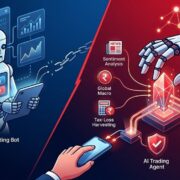


Global Tier-1 banks are moving past traditional client segmentation to embrace AI-driven hyper-personalization, fundamentally changing how wealth managers interact with High-Net-Worth Individuals (HNWI). For junior analysts and associates, mastering these automated portfolio construction and tax-optimization tools is no longer a luxury but a core requirement for career progression in a data-centric industry.
In our observation, the wealth management industry is currently undergoing its most significant shift since the introduction of the modern portfolio theory. For decades, private banks grouped clients into broad buckets based on simple risk profiles—conservative, moderate, or aggressive. Today, that model is dying. Major players like JPMorgan and Goldman Sachs are deploying sophisticated machine learning models to analyze thousands of data points, from spending patterns to social media sentiment, to create a “segment of one.”
The Evolution of the “Segment of One”
The real-world impact of hyper-personalization is most visible in the transition from static quarterly reviews to real-time, event-driven portfolio adjustments. Instead of waiting for a client meeting to discuss market shifts, AI agents now monitor global events and automatically suggest rebalancing strategies tailored to the specific tax jurisdictions and liquidity needs of an individual client.
Behavioral Analytics and Sentiment Mapping
- Predictive Intent: By analyzing past transaction data and communication styles, AI can predict when a client is likely to withdraw capital for a major purchase or a business investment before they even pick up the phone.
- Communication Optimization: Large Language Models (LLMs) are being used to summarize complex research reports into the specific tone and format a client prefers—whether that is a brief text alert or a deep-dive technical memo.
- Sentiment Anchoring: ML algorithms can detect “stress signals” in client emails or calls, alerting a relationship manager to reach out personally during periods of high market volatility to prevent panic-selling.
Automated Tax-Loss Harvesting (TLH)
One of the most valuable applications of AI in modern wealth management is the automation of Tax-Loss Harvesting at scale. Historically, this was a labor-intensive process reserved for the ultra-wealthy. Today, AI-driven engines scan portfolios daily to identify underwater securities that can be sold to offset capital gains, simultaneously buying a correlated but not identical asset to maintain market exposure.
Efficiency Analysis: Traditional vs. AI-Augmented Wealth Management
To understand why this shift is inevitable, we must look at the operational metrics. The following table compares the old-guard methodology with the AI-integrated approach currently being adopted by leading G-SIBs.
| Factor | Traditional Wealth Management | AI-Augmented Wealth Management |
|---|---|---|
| Process Speed | Days to Weeks (Manual research & execution) | Near Real-Time (Automated scanning & alerts) |
| Risk/Error Rate | Moderate (Human bias & manual entry) | Low (Data-driven logic & algorithmic safety) |
| Operational Cost | High (Requires high headcount per $1B AUM) | Low-to-Medium (Scalable through software) |
| Client Customization | Basic (Standardized Model Portfolios) | Hyper-Specific (Customized to individual tax/ESG goals) |
Bridging the Gap: The Role of the Junior Analyst
If you are an associate or a junior analyst, you might fear that this automation replaces your role. In reality, it changes your job description. The “spreadsheet monkey” era is over. Your value now lies in “Model Oversight” and “Strategic Translation.” You are the bridge between the AI’s output and the client’s actual life goals.
Practical AI Workflows for Associates
We see the most successful juniors utilizing AI in three specific ways:
- Data Synthesis: Using Python or internal AI tools to scrape news and filter it for specific portfolio impact, rather than reading generic newsletters.
- Compliance Pre-Clearance: Using RegTech AI to ensure that a proposed trade for a cross-border client meets the specific KYC/AML requirements of both jurisdictions before it ever reaches the trading desk.
The Algoy Perspective
The real winner in this technological arms race will be the firms that successfully integrate AI without losing the “human touch” that HNWI clients demand. The biggest mistake firms are making is assuming that AI is a cost-cutting tool. It is not; it is a revenue-expansion tool. By automating the mundane, senior bankers can manage 5x more clients while providing a higher level of service than they ever could manually.
However, there is a reality check: most global banks still struggle with messy, fragmented data silos. While the front-end AI looks impressive, the back-end “legacy spaghetti” often prevents these tools from reaching their full potential. As an analyst, if you can become the person who understands how to clean, structure, and feed data into these models, you become the most valuable person in the room. The future of banking isn’t just about managing money; it’s about managing the data that represents the money.
Sources and Further Reading
For more insights on how the world’s leading financial institutions are rolling out these technologies, please refer to the official newsrooms of the following organizations: